Finger on the Trigger
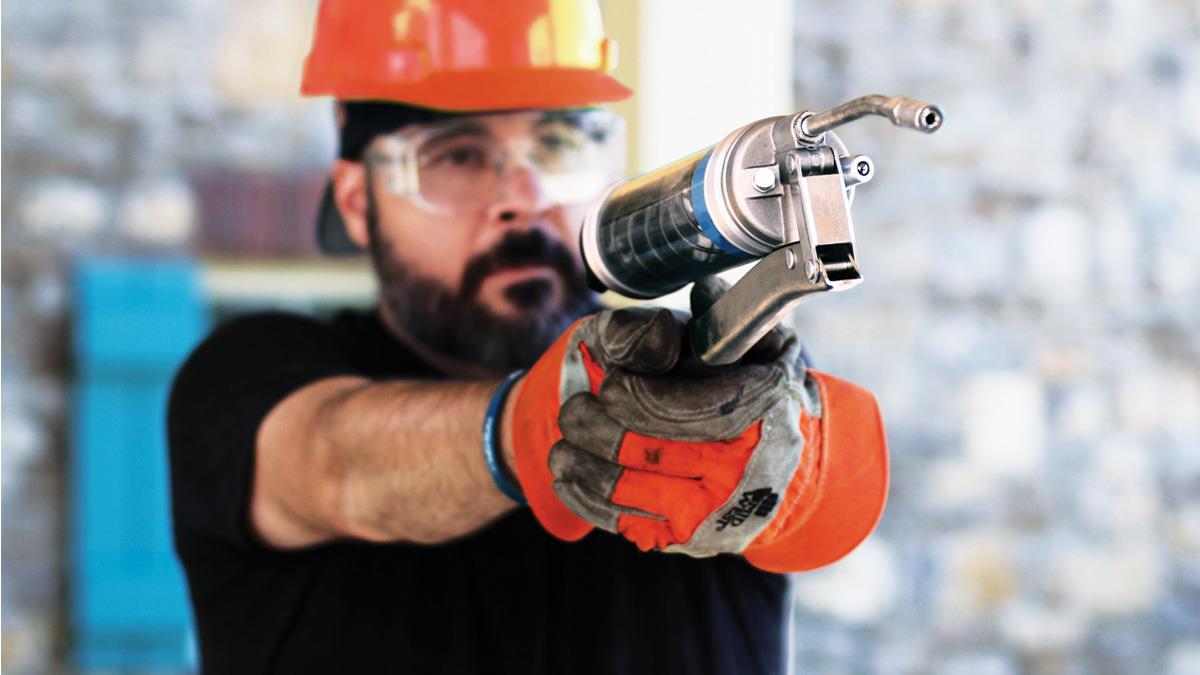
You probably handle grease guns almost daily—on bearings, fittings, and couplings. They’re standard tools in your arsenal. But what many don’t realize is how dangerous they can be. A simple slip or unexpected burst of pressure can result in a high-pressure injection injury, one of the most serious and overlooked hazards in industrial maintenance.
What Is a High-Pressure Injection Injury?
In simple terms, it’s when grease or fluid is shot through your skin and into your body at incredibly high pressure. This can happen in an instant, and even though it might look like a tiny puncture wound on the outside, the real damage is happening underneath.
Grease guns can reach pressures as high as 15,000 psi—similar to what you’d see coming out of a rifle barrel. When that kind of force is focused into a small stream (like a small failure in a grease hose) and hits skin, it can inject grease deep into your hand or finger. The injury might not even hurt that much right away, which is part of what makes it so dangerous. People often ignore it or wait too long to get medical help, not realizing that potentially toxic grease is spreading through the tissue, cutting off blood flow and causing serious internal damage.
Where and How These Injuries Happen
Most often, the injury occurs when someone is holding a fitting or component steady with one hand and operating the grease gun with the other. A slip, a misfire, or a burst hose, and that grease can find its way directly into your hand. The non-dominant hand is the usual target, since it’s typically the one doing the holding.
The grease doesn’t just stay where it enters. It spreads quickly through soft tissue, moving around tendons and through the muscles of the palm, sometimes working its way up toward the wrist. In severe cases, it can travel several inches under the skin without any sign on the surface.
Why It’s So Dangerous
The biggest danger is that these injuries don’t look serious. You might see a small red mark or pinprick and think it’s nothing. But grease under the skin acts like a foreign invader. It cuts off blood supply, kills tissue, and can trigger massive swelling. Without quick treatment, that can lead to infection, permanent loss of motion, or even amputation.
Medical literature reports amputation rates as high as 50% in some cases—especially when the injection involves solvents, which are even more toxic than grease. And time matters: the longer you wait to get treatment, the worse the outcome tends to be.
What Happens Next?
If you or a co-worker suffer a grease injection injury, the clock is ticking. Even if there’s little or no pain, you need to get to a hospital immediately—preferably one with surgical capabilities.
Doctors will often need to cut into the area to remove the grease and clean out any damaged tissue. You might receive antibiotics, tetanus shots, and sometimes even need skin grafts. Recovery can take weeks or months and almost always involves physical therapy to restore movement.
Prevention: Don’t Let It Happen in the First Place
The best way to deal with a grease injection injury is to not get one at all. And that comes down to good habits, smart tools, and a safety-first mindset.
10 Rules to Prevent Grease Injection Injuries
- Inspect before use. Check hoses, fittings, and the coupler for wear or damage that could result in a sudden release of pressure. Never use grease guns with fraying hoses or damaged couplers.
- Never place your hand on the hose or near the coupler during use. Holding the hose to keep the coupler on the zerk during greasing is the way most injection injuries occur.
- Keep fittings and couplers clean. Grease connection points should be wiped down before connecting – this helps prevent contamination while also promoting a solid mechanical connection.
- Wear proper PPE. While they won’t always protect against high-velocity grease, gloves, safety glasses, and long sleeves can help protect you from minor discharges.
- Know your equipment. Different types of grease guns behave differently and create different pressures – always be aware of their capabilities. Be especially careful with automatic grease guns. Pneumatic and battery-operated grease guns can quietly build pressure without the feedback you’d get from a manual grease gun.
- Maintain your equipment. Grease is made up of a lubricant and a thickener, which can separate during storage and create a solid plug behind which pressure can build. Depressurizing your grease guns, storing them correctly and keeping them clean with regular maintenance can help prevent this problem.
- Train your team. Make sure everyone who operates grease guns is well aware of the risks and how to avoid them.
- Never rely on hardware safety features. Vent plugs, automatic pressure-release valves and other hardware can fail or become blocked. Always treat a connected grease gun like it’s pressurized.
- Upgrade equipment where possible. Older grease guns without modern safety features can pose a higher risk.
- Consider automation where practical. Automated lube systems can eliminate manual greasing (and the associated risks) altogether, provided they are maintained in proper working order.
These aren’t just best practices—they’re investments in keeping your hands safe and your team working.
Real-World Incident: A Close Call
In one reported case, a worker experienced a grease hose failure during routine maintenance. The grease shot through his glove and injected into his palm. He initially thought it was a minor puncture, applied some ointment, and continued working. It wasn’t until hours later, when his hand began to swell and turn blue, that he sought help. He was lucky: after surgery and physical therapy, he regained most function in his hand. But he also lost several weeks of work and now has more limited mobility and a permanent scar across the palm of his left hand.
When to Get Help
Here’s the rule of thumb: if grease breaks your skin, get medical treatment immediately.
Don’t wait for it to start hurting. Don’t shrug it off because it looks small. Don’t try to squeeze it out or clean it with soap. Get it looked at by medical professionals immediately.
You can expect doctors to use medical imaging to see how far the grease has spread. In many cases, emergency surgery is needed to clean out the affected area and prevent long-term damage.
Final Thoughts
A grease gun is a powerful tool. And like any powerful tool, it demands respect. Don’t let its size or familiarity fool you into thinking it’s harmless. One moment of carelessness can lead to months of pain, surgery, and lost productivity.
Be smart. Slow down. Use the right tools. Train your team. And if something does go wrong, don’t tough it out. Seek help fast and make sure others know the risks too.
Because the only thing worse than a grease injection injury is realizing after the fact that it could have been prevented.