




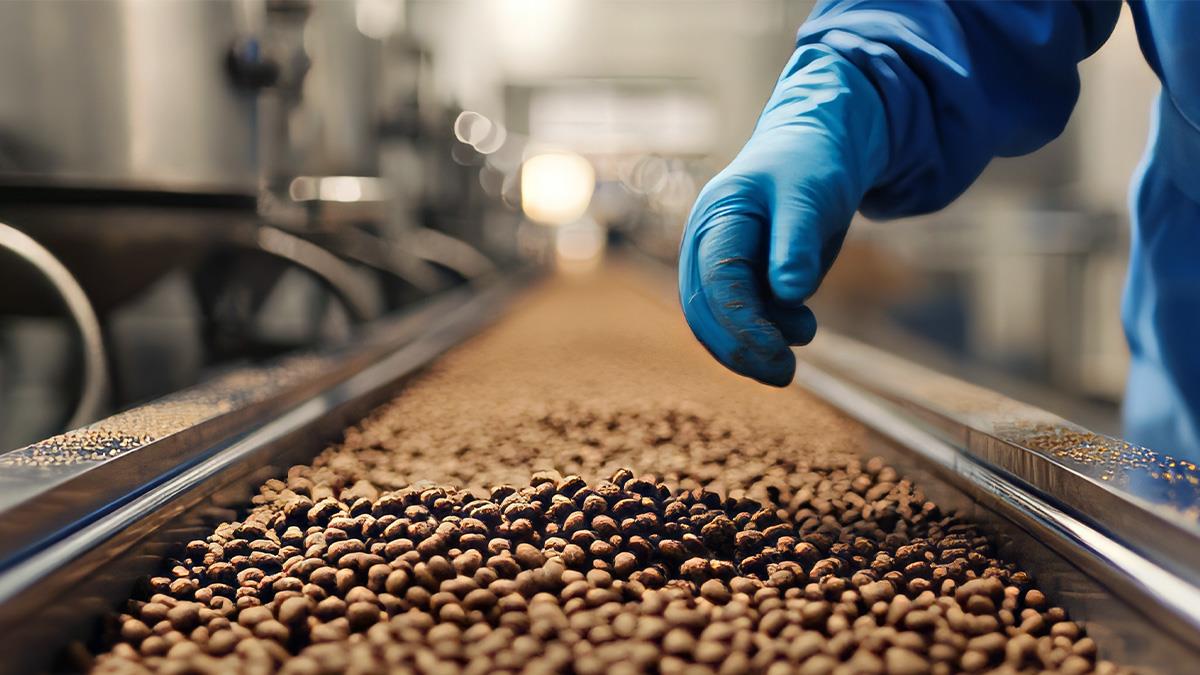
As a Lubrication Specialist in a food-grade facility, I face unique challenges that must be considered when selecting and using food-grade lubricants. I work at Blue Buffalo, where we make dog and cat food, but our guidelines—set by the FDA and NSF—are the same as those followed by our sister companies producing human food. Long gone are the days of “it’s just dog food and it doesn’t matter what’s in it”. Today’s pet parents care just as much about what’s in their pets’ food as they do about their own. We must perform rigorous testing to ensure that what is in the nutrition statement on the bag (protein content, fat content etc.) is in the bag. No foreign substances are allowed, and the percentages of the nutrition facts must be on target. Everything possible must be done to ensure that there is just good quality pet food in the bag and nothing else. Especially nothing that would potentially make pets ill.
That brings us to the lubricants. Every factory must have machinery to make their products. Those pieces of machinery need lubrication to function, grease for the conveyor bearings, oil for the hydraulic systems, and oil for the gearboxes. Since the 1960s when rules were put in place by the NSF in the “White Book” of approved chemicals for use in food producing facilities, food-grade lubricants have been regarded as not as good as non-food-grade lubricants. Those days are gone as well. With improvements in the formulations and additives to lubricants making them at least comparable in functionality to their non-food-grade counterparts, while still maintaining food-safe certification.
“Food-Safe”?
What actually constitutes being ‘food-safe’? According to the FDA and NSF, permissible levels of lubricants from incidental contact are set at 10 parts per million (ppm). What is 10 ppm? As you can see in the picture of 100,000 black dots with one red one mixed in, 10 ppm is barely even noticeable.

That is the allowable level of industrial lubricant in food. If something more than incidental contact happens, foreign substances like lubricants may show up in testing—or worse, may go undetected. There have been many food recalls over the years involving lubricants due to strange smell or taste or even worse, consumers becoming ill. Here are two examples:
The total cost of a recall is devastating and not only limited to the logistical cost of bringing back the product to the manufacturer. It must be removed from shelves at the store, and consumers must be notified by the media that what they thought was safe, may not be and they must immediately stop using this product and return it for a refund. The loss of consumer confidence in your product is something that your company could quite possibly never recover from. The best solution in my opinion, is total exclusion of the lubricants. Even though they are listed as ‘food-grade’, you still want to try to prevent them from entering the product stream. Here is how I do my best to accomplish this task.
Bearings
Bearings and the grease that allows them to run are a necessity. If you have a bearing that takes three grams of grease per month to operate properly, DO NOT just pump in your three grams and “see you next month”. Especially if this bearing is over production line, those three grams of fresh grease will, over the next month, push out the three grams added the previous month. Bearings are designed to purge old grease as they run through the lip or labyrinth seals. Everyone has seen the buildup of grease on the edge of a bearing. If allowed to build without removing the expelled grease, it will drop right on the product!

While the grease is technically ‘food-grade’, my main concern is not with the grease itself. My concern with a buildup of used, expelled bearing grease is the other materials that are in the grease. We have all seen new grease before it goes into a bearing. New grease is usually a completely different color than the grease that is expelled from the seals of a bearing after use. As the bearing runs, normal wear occurs, and metals are picked up by the grease and carried out during regreasing. That is my main concern with the used food-grade grease, that it can no longer be considered food-grade. The used grease may contain Copper, Tin, Nickel, Babbit, Brass, or whatever the internals of the bearings are comprised of. Also, grease on exposed surfaces will attract and hold whatever ambient dirt or debris may be in the air at your facility. As the lubricant degrades, acids and various other chemical compounds can form that may be harmful as well.
Like most people in the maintenance field, I have monthly and weekly PMs. I perform greasing monthly and inspections weekly. During each of them, I will wipe the edges of the bearings to remove built up grease every time I see that bearing. Overkill? Maybe, but by doing this, I can ensure the exclusion I am looking for. It is also just good housekeeping to clean off the bearings even if they are not over a production line. A large blob of ugly looking expelled grease hanging off the bearing or piled up on whatever happens to be below the bearing, to me, does not reflect pride in your work. It also demonstrates a lack of care to any supervision personnel that happen to walk by.
New of Replacement Bearings
Before bearings are replaced, you must find out what lubricant is in them. If the bearings are in a non-contact zone where you can 100% ensure there will be no food contact whatsoever, this is not a critical control point. If the bearings are close to or in contact with the product zone, that is when it is important to know what the bearing was filled with from the manufacturer. Some bearings come already filled with grease, some half-filled, and some with nothing more than a light coat of oil to prevent rusting before installation. The quantity and type of grease is something that you need to know, especially in the case of a generic replacement bearing off the shelf. Flushing the bearing with food-grade grease may be necessary and that is another example of good housekeeping, as mentioned earlier. I once had a piece of new machinery that recommended regreasing with an asphaltic grease like the bearings were filled with from the manufacturer. Good information to know beforehand! Luckily, those bearings were in a non-contact zone and could be flushed and filled with my H1 approved grease and not returned for a different bearing filled with food-grade grease.
Gearboxes
Usually, gearboxes are separated from a product stream far enough that you might not need food-grade oil. I say ‘usually,’ ‘far enough,’ and ‘might’ for a reason. Are you willing to take the risk? My facility is not and neither am I. Gearboxes have seals that will eventually leak or fail. If they are close enough to, or over the product stream, this could become a problem. While bearings could leak a small amount of grease on your product, a gearbox could, in the case of a catastrophic seal failure, introduce a large quantity of oil. In that case, you would probably know this happened and the affected product could be scrapped. More likely is the case of a leaking seal that slowly introduces oil to the product that may not immediately be detected. That is where having H1 oil is your safeguard.
As with food-grade grease, food-grade gear oil has come to be the equal of other industrial oils in quality. The additive formulations in the oil are robust and provide good protection to the gears, while maintaining the food-grade certification. Just as in the case of new bearings, it is important to know what the gearbox is filled with from the manufacturer. Since gearboxes are usually a generic machinery item, the oil in them is at the discretion of the OEM and probably not food-grade or even the quality that you are looking for. I will run a new gearbox for 500 hours or roughly 30 days, during the break in period, then drain, flush, and fill with my pre-filtered food-grade oil. The break-in period is to loosen all dirt and debris and make sure the gearbox does not fail during its early life.
Spray chain lube is also an item critical to be food-grade. Conveyor drive chains always seem to be very close to product zones and therefore need to be H1. As with all the other equipment that I have mentioned, good housekeeping is required. Do not over lube and keep it clean.
In summary, ‘food-grade’ does not mean that the lubricant is lesser quality anymore. I have several gearboxes that have been running for 6 years now with the same oil. I just keep it clean, dry, and cool and monitor the additives with regular oil analysis and perform kidney loop filtering of the oil if an elevated particle count dictates. Food-grade lubricants require added precautions, particularly keeping machinery clean to protect the product. Always remember, 10 ppm isn’t much—and just like your parents told you: CLEAN UP AFTER YOURSELF!!